Every Type of Incense Ranked
 Ashley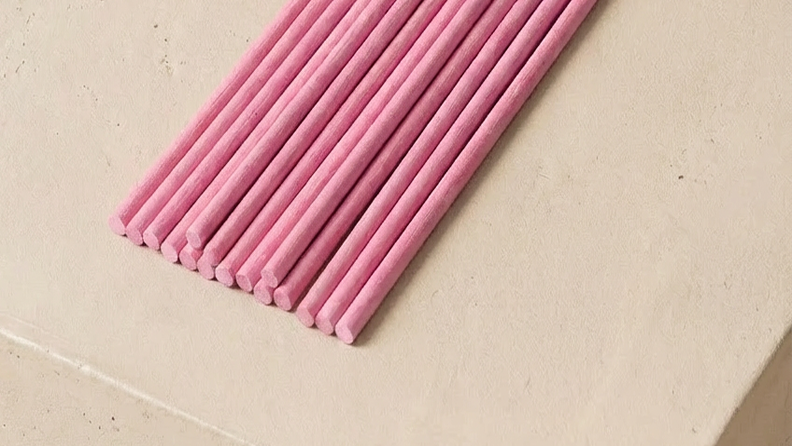
They are all called incense. They are not the same thing.
Two incense sticks. Both look like incense sticks. One has a bamboo core and fills the room in four minutes and stays for a day. The other has no core at all, barely produces smoke. Somehow the room still smells different three hours later.
They do not work the same way. Lighting the wrong one means spending the next four hours in a room that is doing the wrong thing entirely.
I have made it multiple times. Most people who burn incense have, without knowing there was a difference to make.
What does incense smell like? Depends entirely on the type. Indian incense tends toward jasmine, rose, sandalwood, patchouli. Bold and layered. Japanese is drier: aloeswood, clove, cool wood. Middle Eastern is oud, resin, amber. There is no single answer because incense is not one thing. Asking what incense smells like is like asking what music sounds like.
Japanese Incense: The Clean Burn
There is a formal Japanese practice built around incense. Not burning it. Listening to it.
Japanese incense sticks have no bamboo core. The ingredients, aloeswood, sandalwood, clove, cinnamon, are ground into a fine paste and extruded into thin sticks. The burn is clean. The smoke is minimal. What you get is the scent without the ceremony of it announcing itself. The profile is dry, cool, slightly woody. It does not fill a room so much as it changes the quality of the air in one. You are still aware of the room. The room is just slightly better.
This is the format that modern fragrance-led incense brands work from. No bamboo, no filler, just the material itself burning cleanly. If you are used to the thick smoke of Indian incense and find it too much for your flat, Japanese-style is where you go next.
Why does Japanese incense have no bamboo stick? The bamboo core in Indian-style incense burns alongside the paste and contributes to the smoke and smell. Japanese incense removes it so the burn is purer, just the fragrant material itself. Less smoke, longer-lasting scent, cleaner air.
Indian Incense: The One That Commits
India is the reason most people in the West know what incense smells like at all.
Agarbatti, the bamboo-core masala stick, is the format. Ingredients are ground into a paste and hand-rolled onto a bamboo core. The bamboo burns alongside the incense, which is part of the smell. The base is charcoal, wood powder, resins, essential oils. The result is layered and bold: jasmine, rose, patchouli, sandalwood, champa. These are not subtle. A single stick transforms a room. Two sticks are a commitment.
Indian incense is the one with staying power. You burn it and four hours later someone opens your front door and knows. There is nothing wrong with this. It is just worth knowing before you light it twenty minutes before you have to leave.
The masala method creates something specific: it smells like it is made of things. Not a single clean note but a stack of them, slightly rough at the edges, warm in a way that synthetic incense cannot replicate because synthetic incense has never touched soil.
Middle Eastern Incense: Not a Stick
Middle Eastern incense does not arrive in stick form. It arrives as resin, as wood chips, as something you place on burning charcoal and wait for.
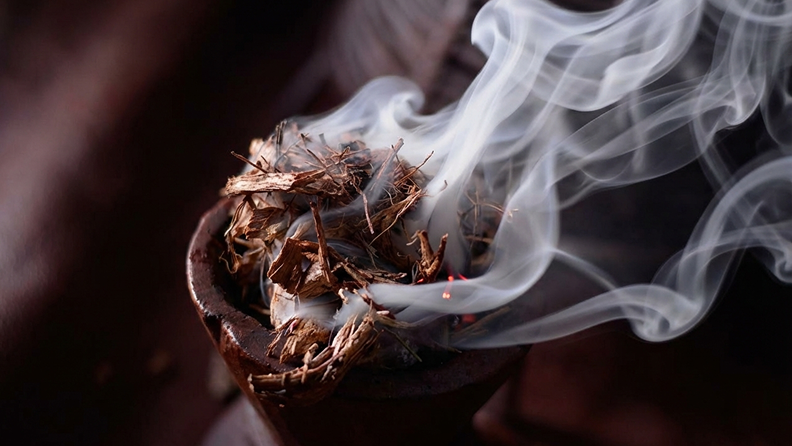
Bakhoor is the most common form: aloeswood chips soaked in fragrant oils, released slowly over heat. The smell is oud, amber, rose, musk, layered and heavy and completely uninterested in being polite about it. In traditional Arab homes, bakhoor is passed among guests on a censer. You hold it under your clothes, let the smoke absorb into the fabric. You are meant to carry it.
Frankincense is the older tradition. Omani frankincense, Boswellia sacra, is among the most prized in the world. Burned as raw resin on charcoal it releases something that sits between clean and medicinal, like a church that is also somehow a forest. It has been burned continuously for thousands of years across multiple religions and cultures, which is either a recommendation or an interesting fact depending on your relationship with that kind of thing.
Middle Eastern incense requires equipment. It rewards patience. It is not for Tuesday mornings. It is for when you have decided something is an occasion.
What is bakhoor? Bakhoor is aloeswood chips soaked in fragrant oils, burned on charcoal rather than as a stick. The smoke is thick and the scent is heavy. It is not a casual burn. In the Middle East it is passed among guests at gatherings. You hold it under your clothes so the scent stays with you after you leave.
Chinese Incense: The Long Burn
China invented the incense clock. Specific blends burned so consistently that you could track hours by how far down the coil had gone. I think about that sometimes when I am burning a coil. Something is being measured. Not by me.
Chinese incense uses agarwood, sandalwood, borneol. Traditional medicinal plants too. The forms are thick sticks. Coils. Cones. Coils burn for hours, sometimes a full day. The smell is denser than Japanese, less sweet than Indian, often with a faintly medicinal or herbal quality underneath the wood.
The continuous burn was originally for temples and ancestor ceremonies. The utilitarian version of this, a coil in your study burning through the afternoon, is not so different in effect. Something is tended. Something continues.
How to Know Which One You Want
Not by smell profile. By use case.
Japanese when the room needs adjusting, not transforming. When you are working, reading, doing something that requires the air to be pleasant and the scent to stay out of the way. It disappears before you notice it is gone.
Indian when you want the room to know something happened in it. When you are cleaning. Resetting. When you need the flat to stop feeling like a Tuesday. It commits.
Middle Eastern when the evening is the point. When you want the smoke visible and the scent to stay on everything in the room for the rest of the night.
Chinese when you are going to be somewhere for a long time and want the scent to outlast you. A coil in the corner. Something continuous.
Where STIIICKS Fits
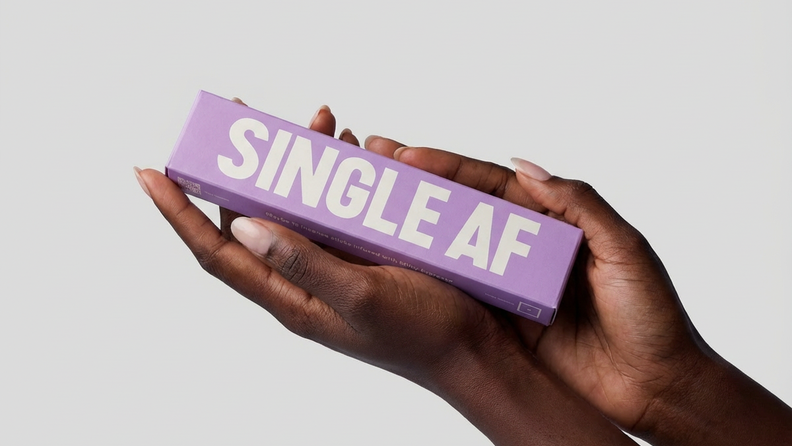
STIIICKS is not spiritual incense. It is not the Nag Champa you find in crystal shops or the lavender stick in a hotel lobby. It is fragrance-led incense, Japanese-inspired in format, no bamboo core, clean burn, minimal smoke, but built around modern scent profiles. Creamy Oud. Milky Espresso. Sakura Mochi. Dark Cacao and Strawberry.
The format is quiet. The scents are not.
If you have ever looked at a luxury candle and thought: I want that but without babysitting a flame, this is the answer. One stick. Leave it. The room does the rest.


People ask me about this more than almost anything else I write about.
I have four incense holders in my flat. I have not needed all four at once. I rotate.
FAQ
I went down the rabbit hole. You are welcome.
Is incense bad for you? Burning anything produces smoke. In an enclosed space that is worth considering. Japanese-style incense produces significantly less smoke than Indian or Middle Eastern traditions. Good ventilation helps. Opening a window after the stick is done lets the scent stay while the smoke disperses.
What is the best incense for a small flat? Japanese-style. Indian masala in a studio means the smell is in your clothes, your hair, and probably your neighbor's hallway by the time the stick is out. Japanese-style produces a fraction of the smoke and stays proportionate to the space. One stick. The room changes without being replaced.
What is frankincense? A resin from the Boswellia tree, most prized from Oman. Burned as raw resin on charcoal it releases something cool and resinous, slightly piney, with a medicinal edge that is strange the first time and makes sense after. Clean but not neutral. You can see why it has been in temples for thousands of years.
How long does incense burn? Japanese sticks burn for twenty to forty minutes depending on length. Indian masala sticks run longer, often forty-five minutes to an hour. Chinese coils can burn for several hours. The scent in the room outlasts all of them. The smoke stops. The smell does not.
Does incense actually smell different from a candle? Yes. A candle scents a room through heat and evaporation, which produces a cleaner, more controlled result. Incense works through combustion. The scent is smokier, denser, harder to predict. It also travels differently through a space. Some people find that preferable. It is less like a product and more like something that happened.